

Policy and governance, explained without the spin
Policy debates matter most when you can see how they reach your household, your business, or your commute. We cover the executive branch, Congress, and the agencies that turn legislation into rules — health care, immigration, and foreign policy first, because that is where Washington's decisions show up fastest in daily life.
The executive branch sets the pace
Most of what changes day to day comes from the administration, not from new laws. The president remains the central figure around which national political reporting is organized, and this term is tied to active disputes over Russia policy, media access, and federal authority. Executive orders and agency guidance can shift how agencies treat a case or a grant long before Congress votes on anything.
That is why we lead with what the executive branch is actually doing: which order was signed, which agency issued the guidance, and what the deadline is. If a change rests on executive action rather than a statute, we say so in the first paragraph.
Where the leverage sits
3
- Executive ordersSet agency direction now
- Agency rulesMove money and eligibility
- New statutesTake months to reach you
Two decisions, two speeds
Health care and immigration enforcement reach households fastest, because both run on rules that agencies apply case by case. Energy and trade decisions show up next, usually through prices. Foreign policy arrives last and sideways, through alliances and sanctions that take quarters to settle. Keeping those speeds apart is most of what makes policy coverage readable.
Health care
The rule behind the price
Reimbursement rules and agency decisions rarely make headlines, yet they decide what you pay at the pharmacy and which providers stay in your network. We name the specific rule or deadline instead of replaying the political argument around it, and when a proposal would change coverage, we say who it applies to.
Immigration
From statute to street
Immigration policy is where legislation, court rulings, and local enforcement collide. A change in federal guidance can alter how agencies prioritize cases long before any new law passes. We track those shifts and what they mean for employers, families, and states that share a border — the mechanism, not the scoreboard.
Foreign policy
One deal, longer shadow
Reporting this month connects the administration to a diesel arrangement with Russia, set inside a wider set of disputes over Russia policy. Energy deals carry alliance and sanctions implications that outlast the news cycle. We explain how a single agreement fits the broader relationship, and where Congress has a say.
Where the paperwork turns into your week
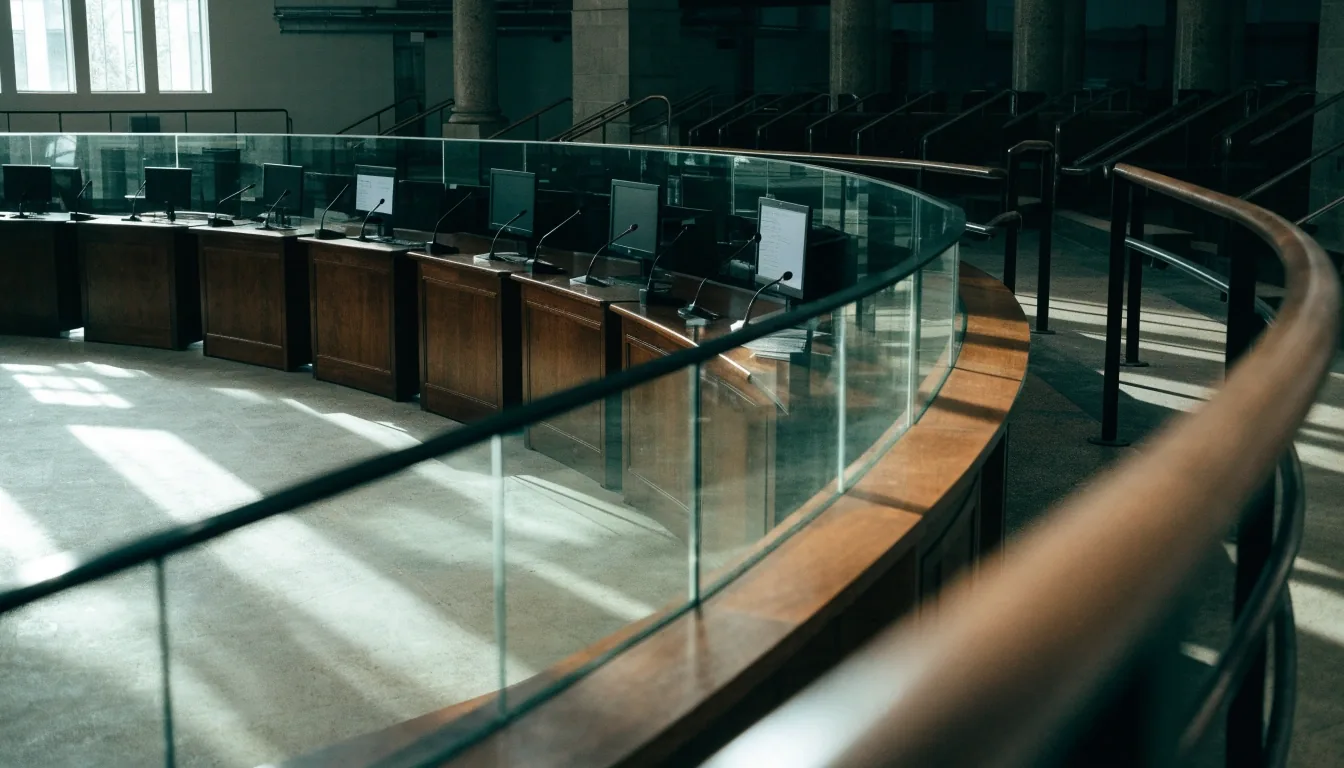
Committees, corridors, and hearing rooms are where a proposal gathers the record that later reshapes a rule. These four frames trace that path: a hearing room seen from the gallery, a corridor briefcase, hands over a document, and a committee table before a markup session.



How legislation actually moves
A bill's path runs through committee, floor scheduling, and sometimes reconciliation, and most proposals die quietly along the way. Knowing which stage a bill has reached tells you more than the press release announcing it. We track committee hearings and markup schedules because that is where the real negotiation happens — and when a proposal stalls, we say so instead of leaving it in limbo.
Committee hearings are often dismissed as theater, but they produce the record that later shapes legislation and litigation. A hearing can surface documents, force an agency to explain a decision, or set up a court challenge. We watch which committees are active on health care, immigration, and foreign policy, and when a hearing produces something concrete, we report it.

A bill usually has three live exits: reported out of committee, folded into a larger vehicle, or left to expire at the end of a Congress.
-
Committee
Hearings, amendments, and a markup vote. Most proposals stop at this stage, and we say so.
-
Floor
Scheduling decides as much as debate does. A stalled calendar is a real answer, not a lapse in coverage.
-
Reconciliation
When the two chambers disagree on spending or eligibility, the fix often happens in a single negotiated package.
The DOJ and the boundaries of federal power
The Justice Department sits at the intersection of law and politics. Current stories say it is investigating TV networks over possible antitrust questions, and its moves now intersect with press-freedom debates and executive authority. Those cases take months, and the outcomes shape how agencies operate. We follow them as governance stories, not just legal ones.
What policy means for your state
Federal policy lands differently depending on where you live. A rule that reshapes energy markets affects a manufacturing state differently than a coastal one, and immigration enforcement priorities vary by region. We try to name the state or industry a policy touches so readers can judge the local effect. National coverage tends to flatten that, and it is worth restoring.
What we watch, and why it matters to you
Which office wrote it, when it takes effect, and whether a court has paused it.
Hearings and markup dates, tracked so a quiet week is visible as a quiet week.
Which cases could freeze a rule, and which reach the agencies that enforce it.
The state or industry a rule touches, so a national story reads as a local one.
Questions readers send us
Short answers to the ones that come up most often. If yours is not here, send it over and we will add it.
How does an executive order differ from a law?
An executive order directs federal agencies within existing authority, while a law requires congressional passage and, usually, a president's signature. Orders can be challenged in court or reversed by a later administration. That is why we note whether a change came from legislation or from the executive branch.
What does the Russia diesel deal change?
Reporting this month ties the administration to a diesel arrangement with Russia, set against broader disputes over Russia policy. Deals like this carry energy-market and alliance implications that take time to play out. We explain the mechanics and congressional oversight rather than predicting outcomes.
Why is the DOJ involved in media cases?
Current reporting says the department is investigating TV networks over possible antitrust questions. Those inquiries overlap with wider debates about media access and executive power. We cover them as governance stories because the results affect institutional trust and press freedom.
Which policy areas affect households most directly?
Health care and immigration enforcement tend to reach people fastest, followed by energy and trade decisions that move prices. Foreign policy matters too, but usually through second-order effects. We prioritize the areas where a rule or deadline is easiest to trace.

Keep reading, keep watching
Send us a policy question
We answer specific reader questions about a rule, a deadline, or a bill's current stage — and publish the answers that help others. If you want to know whether an executive action touches your state or industry, ask, and we will point you at the mechanism.