Ixmavelle Digital Ixmavelle Digital
A raking morning window light across a press-desk surface covered with inked map sheets and stacked printouts, hands annotating a district map

Washington desk · Monday brief

Political news that tracks who holds power

What changed, who pushed it, and what it means for the next election — the 2026 midterms, executive-branch fights, court rulings, and the accountability stories that decide how power gets used.

A two-ink printed Senate race map diagram in dark stone and electric blue, deliberately misregistered like a two-pass print

Seats in play, drawn as a two-ink count: stone for the incumbent line, blue for the margin still moving.

Today's political picture, in plain terms

Four threads that connect the day

  1. The 2026 midterm cycle sets the frame

    Everything else tends to bend around the midterms this year — spending fights, agency rulemaking, and the messaging both parties test in swing states all get read through the cycle.

    Elections

  2. The White House stays at the center

    The Trump administration is tied to active disputes over Russia policy, media access, and federal authority, which keeps most national coverage anchored there.

    Policy

  3. Justice Department inquiries into TV networks

    The antitrust questions under review overlap with the same press-freedom debates running through the press-pool dispute, so the two stories move together.

    Courts

  4. Read the connections, not one headline

    If you read only one thing today, read how these threads meet. A single story rarely shows the shape of the week on its own.

    Start here

Senate seats drawing national attention

Two

South Carolina and Michigan are the races we follow most closely right now — both with named nominees and live arguments about affordability, ideology, and turnout.

See how we track the map

We rank stories by consequence, not by how loud they are online.

A polling shift in one battleground state can matter more than a viral exchange, and we will say so. We also avoid the reflex to treat every development as a turning point — most are not. When something genuinely changes the midterm math or the balance between branches of government, it goes to the top of the page.

Consequence first

What changes a race, a rule, or a branch of government leads. What only changes a conversation waits.

Polls read as tools

Who was surveyed, when, and how the question was worded — before any number gets repeated here.

No invented proof

No fabricated quotes, no invented polls, and no partisan framing dressed up as analysis. Ever.

The Senate map is wider than expected

Most cycles produce a short list of genuinely competitive Senate seats. This one keeps adding names. South Carolina has turned into one of the surprise storylines, with appointed GOP Sen. Darline Graham facing Democrat Annie Andrews and Libertarian nominee Kasie Whitener.

Michigan is drawing outsize attention as a Midwest contest framed around affordability, ideology, and turnout, with Democratic nominee Abdul El-Sayed at the center of that argument. We track both, plus the smaller races that decide which party actually controls the chamber — and we flag when a race tightens or fades instead of treating every state as a toss-up.

Follow the 2026 midterms
A volunteer holding a clipboard mid-air at a folding table outside a community hall during a Senate campaign stop, placards seen edge-on

Campaign stops in states like South Carolina and Michigan now carry national weight — the table, the clipboard, and the local argument underneath the national coverage.

South Carolina

An appointed incumbent, a real contest

Three named candidates and an argument that keeps shifting between national framing and local turnout.

Michigan

Affordability at the center

A Midwest race where cost of living, ideology, and who actually shows up are being argued at once.

When the courts set the terms

Redistricting never really ended after the last census. Reuters reports the U.S. Supreme Court has barred a Republican-drawn map in Missouri for a third time, and that case sits inside a broader fight over maps and representation. Map decisions quietly determine which seats are even winnable before a single vote is cast. We keep a running file on election law so you can see how a ruling in one state reshapes a race in another.

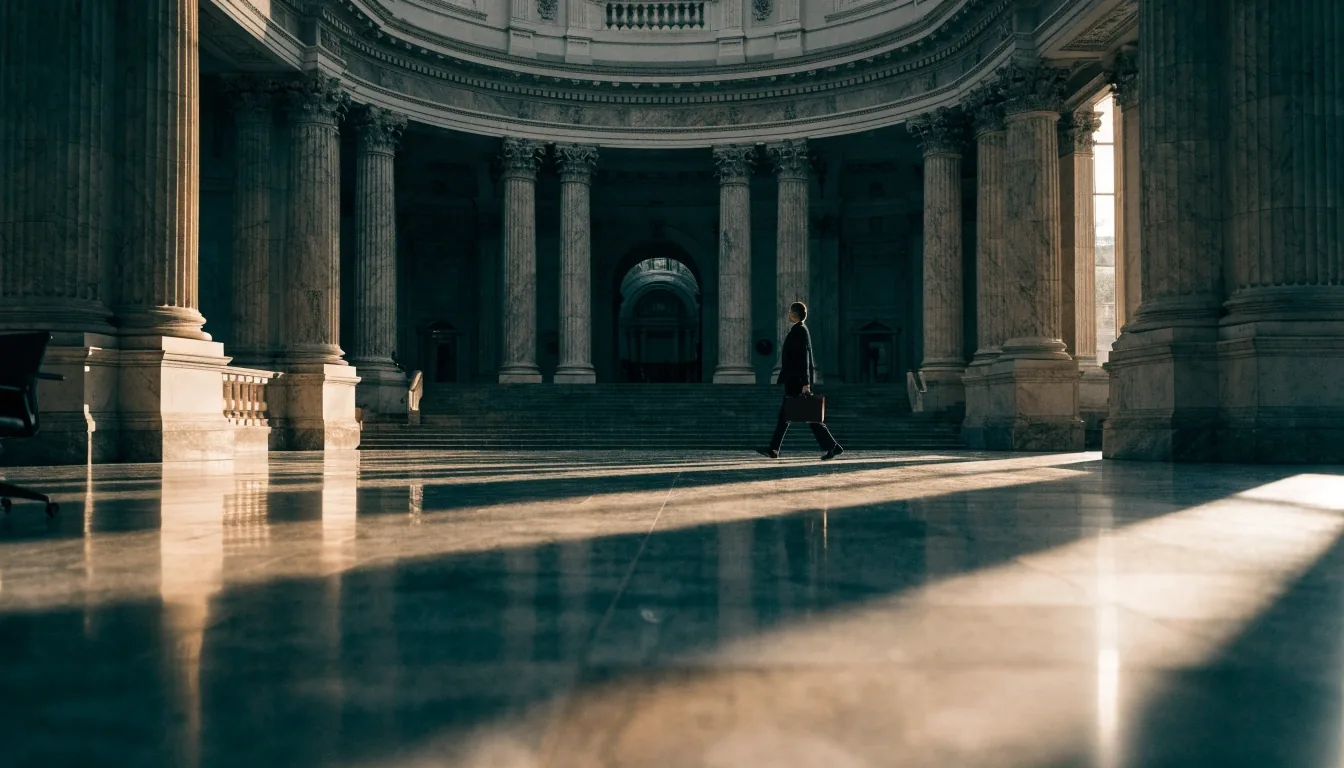
A courthouse corridor with raking window light across a polished marble floor and a single silhouette walking away from the camera
Court rulings on maps and representation are the quiet half of the midterms — decided well before the first vote.
An empty committee hearing chamber seen from the public gallery rail, with a single figure seated at a distant table in low raking light
A committee hearing is a beginning, not a conclusion — the subpoena, the enforcement, and the oath matter more than the room.

Accountability file

Accountability, followed to the end

We stay on stories after the cameras leave: what an investigation produces, whether a subpoena is enforced, and which officials answer questions under oath. The Justice Department's media inquiries and the White House press-pool dispute both fall into this category, because they test where executive power stops. Following them properly takes months, and that is the point.

See court and accountability reporting
Hands turning a printed document seen at an oblique angle on a wooden table beside a closed envelope and a pen, page blurred and unreadable

Policy & governance

Policy that reaches your household

Explore policy coverage

Health care costs, immigration enforcement, and foreign policy rarely stay in Washington. The administration's diesel arrangement with Russia is a good example of a story that starts as diplomacy and ends up in energy prices and alliance politics. The useful question is not whether the deal is good or bad — it is which agency implements it, what deadline applies, and who carries the cost if the terms shift.

We explain the mechanism, not just the headline, so you can judge whether a policy actually touches your life. That means fewer adjectives and more of the specific rule, agency, or deadline involved — the part of the story you can still check in six months.

Energy & Russia

A diesel arrangement reported this month sits alongside broader disputes over Russia policy. Energy deals carry alliance and sanctions implications long after the announcement.

Health costs

Premiums, subsidies, and reimbursement rules change on an agency schedule most households never see. We trace the schedule.

Immigration enforcement

Enforcement practice is set at the local level as much as in Washington, so we report what changes in which jurisdiction — not just the national framing.

Foreign policy

Treaties, sanctions waivers, and alliance commitments are the connective tissue between a headline abroad and a price at home.

A small community listening session in a plain hall with folding chairs and seated voters, one speaking mid-gesture in low window light

What undecided voters are actually saying

The voters who decide close races are usually less ideological than the activists on either side. In Michigan and similar states, the issues that surface most are affordability, health care, and how immigration is handled locally. Those concerns do not map neatly onto party messaging, which is why campaigns keep testing new framings. We report what voters say in their own words when we can, and we label it clearly when we cannot.

How insiders read a fast news day

Political professionals rely on short, dense explainers to keep up, the kind of wire-desk summary that a fast outlet like Axios Politics & Policy is known for. That compressed style has real limits — it flattens the sequence of events and usually drops the process — but it is useful for spotting which stories are actually moving.

We borrow the discipline of brevity without losing the context. A summary line tells you what happened; the paragraph after it should tell you which agency, which vote, or which deadline made it happen. If a story needs 900 words to be honest, it gets 900 words.

Public-radio context, applied here

NPR Politics often adds institutional and policy context to fast-moving events, and that approach is worth borrowing. When a press-pool dispute or a foreign-policy deal breaks, the useful question is not who won the exchange — it is what structure it changes, and whether that change outlasts the news cycle.

We aim for the same steadiness: fewer hot takes, more explanation of the process behind the news. Fewer predictions about outcomes, more of who holds which lever and when it can be pulled. It is a slower way to report, and a more durable one — the kind of political news that stays useful after the week it was filed.

Family names and Republican messaging

Donald Trump Jr. shows up regularly as a partisan messenger — more informal than official, but still newsworthy. His role says something about how the Trump brand continues to shape campaign strategy and conservative media, especially in a midterm year when surrogates do the travelling that candidates cannot.

We cover that influence without pretending it is a formal government post. Surrogates matter in midterms: they carry the message to county chapters, test the lines that later become advertisements, and shape what local candidates feel safe repeating on a stage at home.

How we read a surrogate

  • Where they appear, and in front of whom — a county dinner or a national broadcast are different jobs.
  • Whether the message tracks or drifts from the administration's own line.
  • Which lines local campaigns later repeat, and which quietly drop.
  • What the messenger's role is officially, so influence is never confused with office.

Reading the polls without getting fooled

Polling is a tool, not a verdict. We look at who was surveyed, when, and how the question was worded before repeating a number. A single survey showing a Democrat ahead in a red-leaning state is interesting; three consistent ones are a trend. We try to make that distinction clear so you can argue about politics using better evidence.

The same discipline applies to how both parties read the same data. Each side tends to emphasize the surveys that favor it and downplay the rest. The honest read is often that several races are close and the map is still moving — not that one poll settled the cycle.

What we don't do

We do not run fabricated quotes, invented polls, or partisan framing dressed up as analysis. If a detail cannot be sourced, it does not run.

We do not tell you how to vote. Our job is to lay out what happened, who is responsible, and what the next step in the process is.

And we do not pretend a story is settled when it is still in court. If you want a newsroom that shows its work, keep reading — and if you have something we should see, send us a tip.

Questions readers ask us

Short answers on leverage, competitive races, the administration's court fights, and how we read the polling.

Who is gaining the most leverage in the 2026 midterms?

Right now the Senate map is the clearest signal. Races that were not expected to be competitive, including South Carolina and Michigan, are pulling national attention, which usually means both parties see a path. Leverage shifts with each new poll and map ruling, so we update this as the cycle moves.

Which Senate races are genuinely competitive?

South Carolina and Michigan are the two we are watching most closely, based on current coverage. Both feature named nominees and active campaign framing around affordability, ideology, and turnout. We flag when a race tightens or fades rather than treating every state as a toss-up.

How are the Trump administration's court fights affecting governance?

They are reshaping how agencies operate, especially where media access and executive authority intersect. The Justice Department's inquiries into TV networks and the White House press-pool dispute both test the boundaries of federal power. Those fights often take longer than a news cycle, which is why we stay on them.

What does the Russia diesel deal mean for U.S. foreign policy?

Reporting this month connects the administration to a diesel arrangement with Russia, which sits alongside broader disputes over Russia policy. Energy deals rarely stay purely economic; they carry alliance and sanctions implications. We explain the mechanics rather than guessing at outcomes.

How are Democrats and Republicans reading the current polling?

Both sides tend to emphasize the surveys that favor them and downplay the rest. The honest read is that several races are close and the map is still moving. We separate a single poll from a pattern so you can judge for yourself.

Where to go next

The desk publishes through the week from Washington. Pick the lane that matches what you are trying to follow — the races, the rulemaking, or the court fights — or write to us directly if you have a document, a tip, or a question about coverage.